Skip to content
David used to joke that his mom got more snow days than Calgary school kids.
Every winter, as the sidewalks turned icy and the wind picked up, 82-year-old Maria would say the same thing: “I’ll go out when it’s nicer.” But “nicer” never really came. Weeks went by. Then months.
By February, David started noticing small changes that didn’t seem like a crisis, but didn’t feel right either. Maria stopped getting dressed before noon. She preferred the couch to the kitchen table. She moved her feet slowly, shuffling from room to room, one hand always on the wall or a chair. Her legs felt weaker when she tried to stand. She was sleeping more during the day and complaining of feeling “foggy” and “heavy” in her body.
Nothing dramatic had happened. No fall, no ambulance, no big diagnosis. But little by little, winter and inactivity were shrinking her world.
If you’re caring for a senior in Calgary, this might sound uncomfortably familiar. Our winters are long, dark, and icy. For many older adults, especially those with arthritis, heart conditions, or mobility challenges, going outside can feel risky or simply impossible. The result is often a quiet, hidden form of decline: less movement, more stiffness, more isolation, more worry for the family.
The good news? You don’t need a gym membership, fancy equipment, or perfect health to help a loved one stay active. Gentle senior exercise at home in Calgary can be as simple as a sturdy chair, a safe hallway, and someone kind by their side.
In this article, we’ll explore why staying active at home matters so much in winter, simple movement ideas you can try right in the living room, how regular activity supports mental health, and the role a caregiver can play in keeping your loved one moving safely and consistently.
Why winter turns “a little less active” into “barely moving at all”
Most of us move less when the temperature drops, but for seniors, the change can be dramatic. Icy sidewalks, snowbanks, and cold air are not just unpleasant; they can be dangerous. A single slip can lead to a hip fracture or hospital stay. So when a senior says, “I don’t feel safe going out,” they’re often right.
The problem is what happens next.
When an older adult spends most of their day sitting or lying down, their muscles weaken surprisingly quickly. Joints stiffen. Balance gets worse. Everyday movements, like standing up from a chair or walking to the bathroom, start to feel harder. That difficulty often leads to fear. Fear then leads to even less movement. It becomes a quiet spiral:
less movement → more weakness → more fear → even less movement
On top of that, winter brings shorter days and less natural light. Many seniors already struggle with low mood, loneliness, or anxiety. Being at home almost all the time, without meaningful movement or fresh stimulation, can make those feelings heavier. You might notice more irritability, sadness, or “I just don’t feel like it” responses to almost everything.
The important thing to remember is this: you don’t have to turn your loved one into a “fit senior” to make a difference. Tiny, gentle movements, done regularly, can slow or even reverse some of this decline. Think of activity not as a workout, but as maintenance for the body and mind—like gently starting an engine each day so it doesn’t seize up.
Gentle movement ideas that work in a Calgary living room
When we say “senior exercise at home Calgary,” many families picture something complicated or unrealistic. In reality, the most helpful routine is usually simple, repeatable, and customized to what your loved one can actually do.
A good starting point is to weave movement into the day rather than creating a “big exercise session” that feels intimidating. Here are a few gentle categories of movement you can use and adapt.
Using the chair as a safe base
For many seniors, the safest place to start is seated. A sturdy chair with arms becomes a little fitness station.
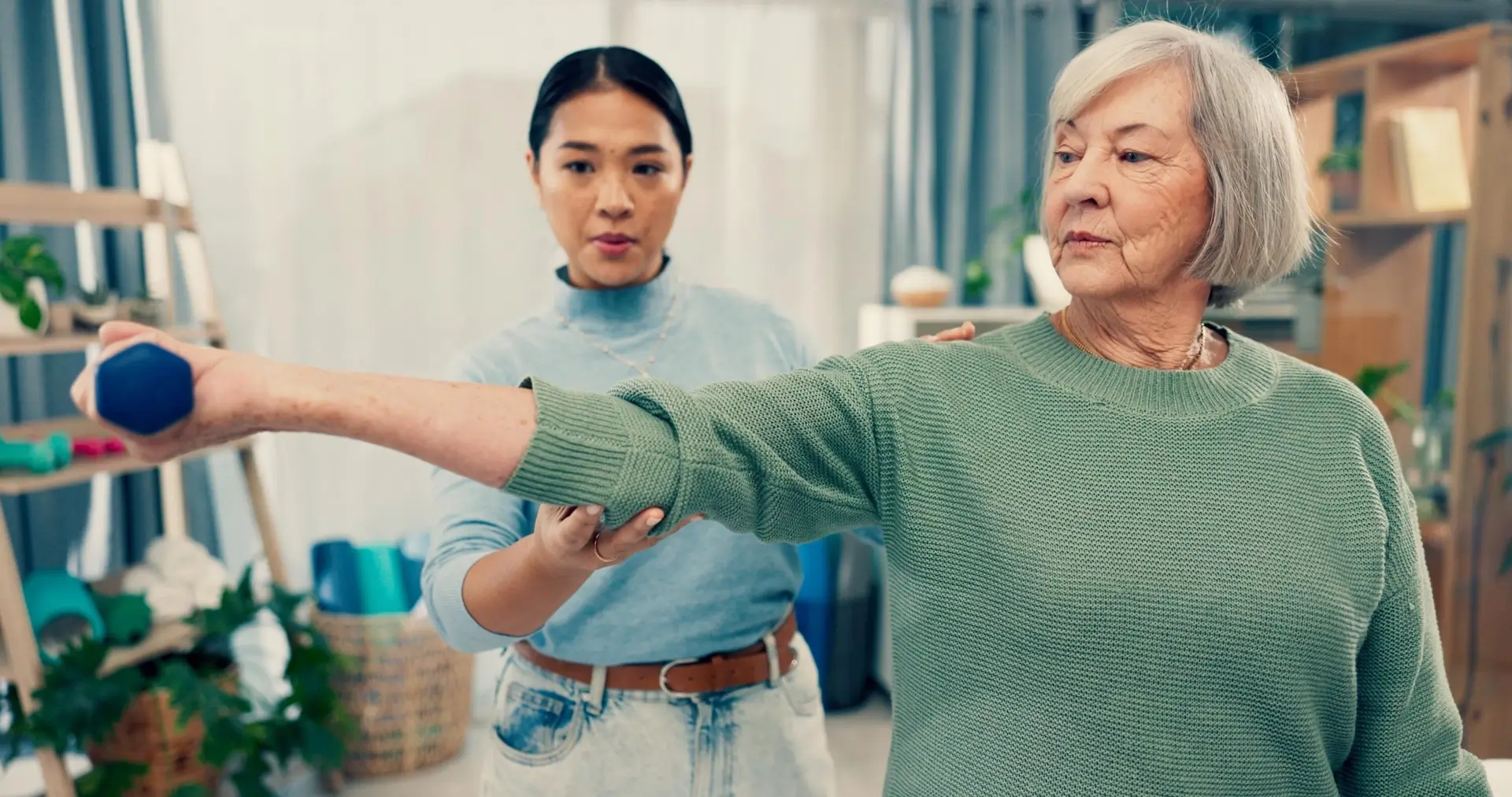
They can slowly lift one knee at a time, like a gentle marching motion, to wake up the hips and thighs. They can straighten one leg at a time and hold it briefly, then lower it again, which quietly works the muscles used for walking. Ankle circles help with circulation and reduce stiffness before standing. Even something as simple as sitting tall and slowly raising the arms to shoulder height, then lowering them, can help maintain shoulder mobility and improve posture.
The beauty of chair-based movement is that it removes the fear of falling. Your loved one can rest whenever they want, and you can sit beside them and mirror the movements so it feels like something you’re doing together, not something being “done to” them.
Turning the hallway into a safe walking lane
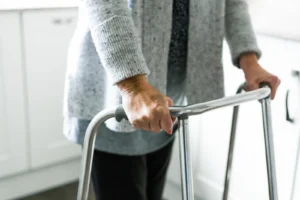
If your loved one is able to stand and walk, even with a cane or walker, a clear hallway or open space between rooms can become an indoor walking route.
You don’t need long distances. What matters is repetition and safety. You might encourage them to walk from the bedroom door to the living room and back, once or twice, after breakfast and again in the afternoon. If they tire easily, you can break it into short “laps” with rests in between.
Small adjustments make this much safer: remove loose rugs, ensure good lighting, and encourage them to wear proper footwear (not slippery socks). If balance is a concern, you can walk just behind or beside them, ready to assist but not pulling or pushing.
Over time, you might gently increase the number of laps as their confidence grows. What looks small on paper—two or three minutes of hallway walking a few times a day—can add up to surprisingly meaningful movement.
Practising balance in tiny, careful doses
Balance work needs to be handled carefully, but it can be incredibly valuable for fall prevention. This is where the support of a trained caregiver or physiotherapist can be very helpful, especially if your loved one has had a fall before.
Simple examples include standing behind a sturdy chair and holding the back with both hands while gently shifting weight from one foot to the other, or standing with feet a little closer together than usual and focusing on staying steady for a few seconds at a time. The goal is never to create fear, but to lightly challenge the balance system with full supervision and a solid support to hold on to.
Even standing for a short time, with support, after long periods of sitting can help the body remember what it feels like to bear weight and stay aligned.
How movement supports mental health, not just muscles
When families think about exercise, they often imagine benefits like stronger legs and better mobility. Those are important. But for many seniors, the most powerful effect of regular movement is actually on mood and mental wellbeing.
When an older adult moves, even gently, their body releases chemicals that support better sleep, clearer thinking, and a more stable mood. They often feel a small sense of accomplishment: “I did something today.” For a person whose world has become smaller, that feeling matters a lot.
You may notice that on days with even a bit more activity, your loved one is:
- More talkative or willing to engage in conversation
- A little less irritable or anxious
- More interested in everyday tasks, like choosing clothes or helping set the table
Movement can also reduce some of the physical discomforts that feed into low mood. Stiff joints often hurt more after long periods of immobility. Gentle movement increases blood flow, warms the muscles, and can sometimes ease pain enough to make sitting, standing, or sleeping more comfortable.
There’s also a strong emotional piece: exercising together—whether it’s a few hallway laps or seated arm raises while watching TV—can create moments of connection. You can laugh together when you both lose count of repetitions. You can celebrate small wins. For someone who feels like they are “only receiving care,” being an active participant in their own wellbeing can restore a sense of dignity.
In a Calgary winter, when social outings are harder and days can blur into each other, these small boosts to mental health become even more valuable.
The quiet, crucial role of caregivers in keeping seniors active
Most seniors don’t wake up in January suddenly motivated to start a home exercise routine. Even if they understand the benefits, they may feel afraid, tired, or simply unmotivated. This is where caregivers—both family and professional—make a huge difference.
A caregiver can gently “build movement into the day” instead of framing it as formal exercise. For example:
- After helping your loved one wash up and get dressed, the caregiver might say, “Let’s walk together to the kitchen instead of using the walker the whole way. I’ll be right beside you.”
- While the kettle is boiling, they might lead a short seated routine: “While we wait for the tea, let’s lift our knees a few times. I’ll do it with you.”
- During a TV show, they might suggest a commercial-break movement moment: “When the ads come on, we’ll do our ankle circles and arm raises.”
These small invitations are usually more effective than saying, “It’s time for your exercises now.” The tone matters: gentle, encouraging, never scolding.
A trained home care professional also adds something very important: they understand what is safe for a senior with specific health issues. Someone with a heart condition, advanced arthritis, or osteoporosis needs modified movements and careful monitoring. A caregiver with experience in senior exercise at home in Calgary knows how to adapt activities for:
- Shortness of breath
- Joint pain
- Use of mobility aids
- Fatigue or dizziness
They can spot signs that an activity is too much and adjust on the spot. They also know how to balance encouragement with respect for limits, so your loved one feels supported, not pushed.
For family caregivers, there’s another benefit: relief from the constant feeling that it all depends on you. When a professional caregiver is in the home, you don’t have to be the motivator, the safety officer, and the activity planner all at once. You can simply be a son, daughter, spouse, or friend, knowing that movement is being encouraged in a thoughtful, structured way.
A simple starter routine you can build on
Every senior is different, but many families find it helpful to begin with a very small, consistent routine and expand gradually. For example:
Morning:
- Help your loved one sit in a sturdy chair, feet flat on the floor.
- Do 5–10 gentle seated marches per leg and a few ankle circles.
Midday:
- Encourage a short hallway walk—just to the next room and back, once or twice, with support as needed.
Afternoon or early evening:
- Repeat the seated exercises, adding in a few arm raises if it feels comfortable.
This doesn’t sound like much. But for someone who has been mostly sedentary, it can be a meaningful and sustainable shift. Over time, you can increase the repetitions, add a few moments of supported standing or weight shifting, or extend the hallway walks.
The key is consistency. A tiny amount of activity, done most days, is much more valuable than an ambitious routine attempted once and abandoned.
When it’s time to ask for extra help
Sometimes, despite your best efforts, it’s just too much to manage alone. Maybe your schedule is packed. Maybe your loved one responds better to guidance from someone outside the family. Maybe you’re worried about safety, or you’re already exhausted from juggling work, kids, and caregiving.
This is often the point where families in Calgary start exploring in-home support. A caregiver from a local agency can come into the home and:
- Incorporate gentle movement into personal care, meal preparation, and companionship time
- Keep an eye on changes in balance, strength, and confidence
- Coordinate with you so everyone is on the same page about what’s safe and realistic
For seniors, having a familiar face come regularly can turn exercise from a chore into part of a pleasant visit: “When Sarah comes, we always do our little walk and stretches.” It stops being about “I have to” and becomes “This is what we do together.”
If you choose a home care provider that truly understands the realities of aging in Calgary’s climate, they’ll know how to adapt routines through long winters, icy weeks, and abrupt weather changes, always prioritizing safety and dignity.
Bringing it back to Maria
Remember Maria, who spent most of her winter on the couch? With David’s support and a caregiver visiting several times a week, her days slowly changed.
They didn’t sign her up for a fitness class. There was no treadmill in the living room. Instead, her caregiver started with gentle chair movements, a few minutes of walking to and from the bedroom, and simple balance practice while holding the kitchen counter. Some days she felt up for more, some days less. But they kept showing up, together.
After a couple of months, Maria’s legs were stronger. She used the furniture for support a little less. She started taking more pride in getting dressed earlier in the day. Her mood lifted. She still didn’t love Calgary winters—but she no longer felt completely ruled by them.
If your loved one is slowing down as the snow piles up outside, you’re not powerless. With patience, small steps, and the right support, senior exercise at home in Calgary can be safe, gentle, and surprisingly effective.
And you don’t have to figure it out alone.
If you’d like help building a simple, realistic activity routine for your parent or partner, Compassion Senior Care can match you with a caregiver who understands both aging and Calgary winters. Together, we can keep your loved one moving, connected, and as independent as possible—right at home.
Ready to explore what that could look like for your family? Contact Compassion Senior Care today for a friendly, no-pressure conversation about your options.