Skip to content
A few months ago, a daughter we work with stopped by her father’s place in Mount Pleasant for a Sunday visit. He was fine. He made tea. They talked about the Stampede. He had lived in that house for 41 years.
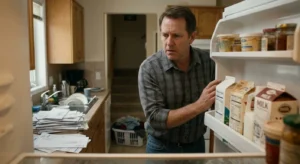
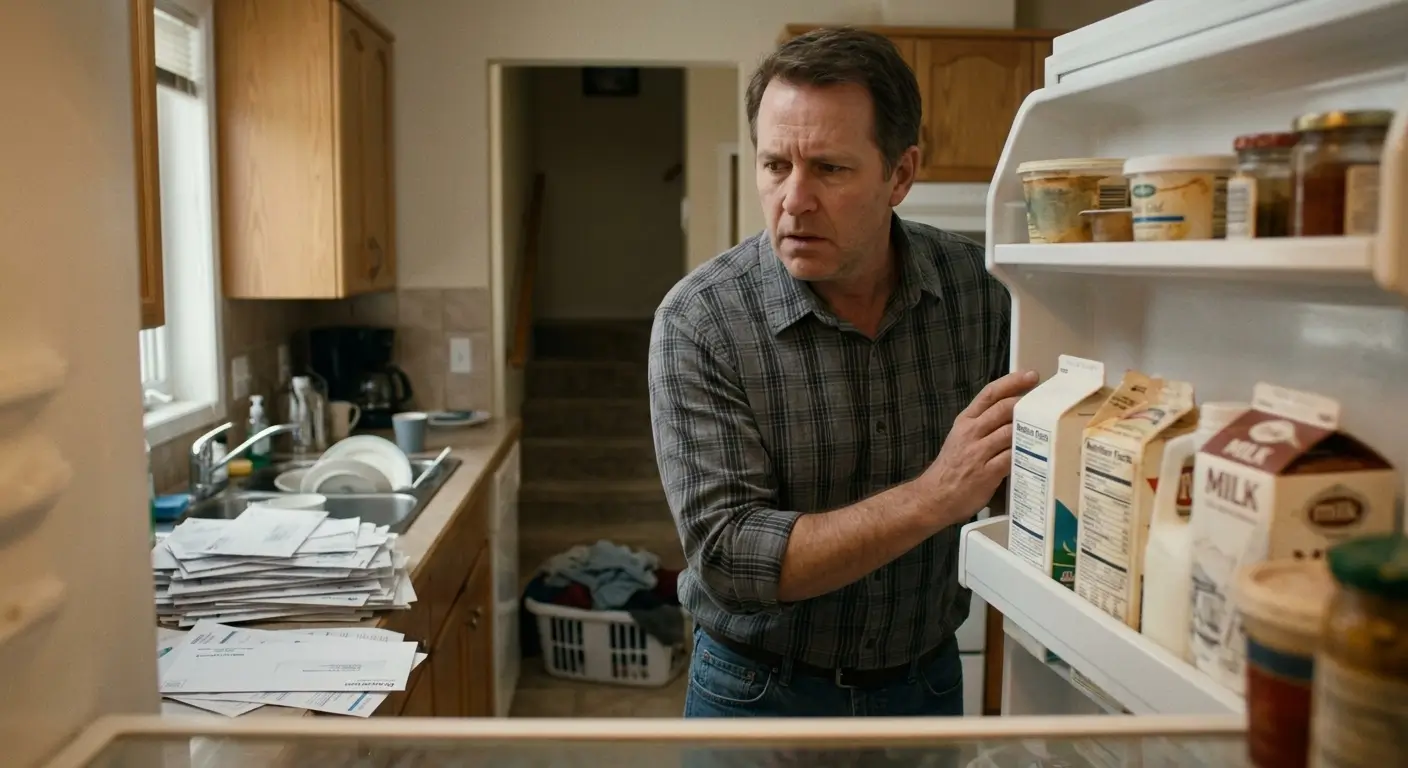
She kissed him goodbye and walked to her car. Then she sat in the driveway and cried, because for the first time, she had really looked.
The bathmat in the front hall was curled at the corner. The lamp cord by the couch crossed the path between his armchair and the kitchen. The chair he had been sitting in was so low he had to rock himself three times to stand. The bulb above the basement stairs had been out, she realized, since at least Christmas. None of it was new. She just hadn’t seen it.
If you have an aging parent in Calgary, home modifications for seniors are usually not about renovating a house. They are about noticing the small things that have always been there, and quietly fixing them before someone falls.
Why most senior falls happen at home, not on the ice
We tend to think of falls as something that happens on a snowy Calgary sidewalk in February. They do. But the majority of serious falls for older adults happen inside the home they have lived in for decades. The hallway. The bathroom. The bedroom in the dark on the way to the washroom at 3 a.m.
This is the painful part. The home that feels safest is the place where most falls happen, partly because familiar surroundings invite carelessness, and partly because aging changes the way a person moves through a space they have not really looked at in years.
A senior home safety checklist is not a renovation plan. It is a fresh pair of eyes on rooms that have stopped being examined.
The entryway
Start here, because Calgary winters make this the most dangerous room in the house from November to April.
Replace any loose mat with a low-pile, rubber-backed mat that lies completely flat. Curled corners are how falls begin. Make sure there is a sturdy bench or chair where your parent can sit to take off boots, instead of balancing on one leg at the door.
Check the lighting. The entry should be bright enough to see floor changes, ice, or water tracked in from outside. If there is a step up into the home from the garage or front door, mark the edge with high-contrast tape so it is visible at a glance.
A grab bar by the front door, mounted into a stud, costs very little and changes everything for someone managing boots, bags, and balance in winter. For more on winter risks specifically, our winter safety guide for Calgary seniors walks through the seasonal hazards in more detail.
The living room
This is where the small daily hazards quietly accumulate.
Get rid of throw rugs. All of them. They are the single most common tripping hazard in any senior’s home, and no amount of double-sided tape solves the problem permanently. If a rug is sentimental, find another room for it.
Reroute electrical and lamp cords so they never cross a walking path. Use cord covers along baseboards if needed.
Look at the height of your parent’s main chair. If they have to rock or push hard to stand, the chair is too low. A firm seat at a height that lets them stand in one smooth motion makes a meaningful difference, and there are simple chair risers that solve this without buying new furniture.
Make sure lamps are within reach from the chair, so nobody is standing up in a dark room to turn on a light.
The kitchen
The kitchen is where overreaching causes most accidents. The goal is to keep everything used daily between knee and shoulder height.
Move heavy items, like pots, casserole dishes, and bags of flour, out of low cabinets and up to counter level. Move daily-use dishes and glasses out of high cabinets and down to easier reach.
Remove the step stool from regular use, or replace it with one that has a tall handle for support. Standing on a folding stool to reach the top shelf is one of the most common ways seniors end up in a Calgary emergency room.
Add good task lighting under upper cabinets, especially over the stove and main counter. Aging eyes need significantly more light to see contrast and depth than they did at 50.
Check the kitchen floor for any small mat by the sink, and either secure it firmly or remove it.
The bathroom
If you do nothing else from this list, do the bathroom.
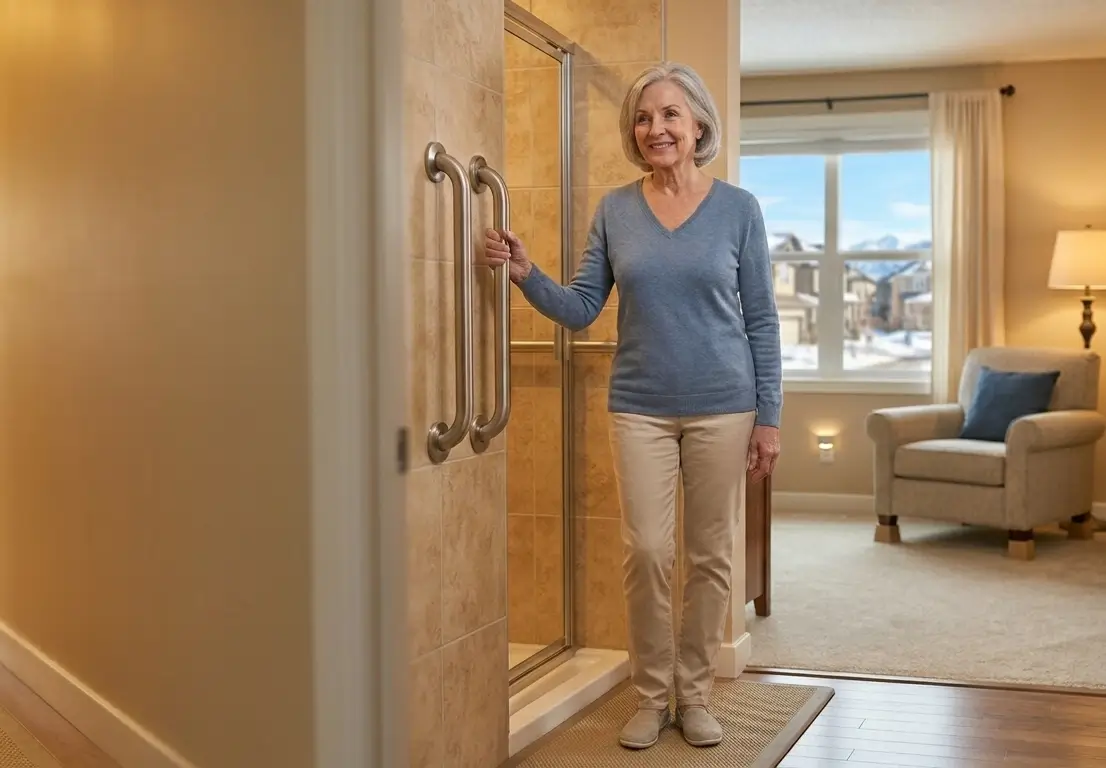
Install grab bars beside the toilet and inside the shower or tub, mounted into wall studs by someone who knows what they are doing. Suction-cup grab bars are not safe. They feel sturdy, then they fail at the worst possible moment.
Put a non-slip mat with strong suction inside the tub or shower, and a low-pile bath mat with rubber backing on the floor outside.
Consider a shower bench, especially if your parent has balance issues, arthritis, or is recovering from surgery at home. A bench turns a high-risk activity into a manageable one.
Raise the toilet seat if standing up from it has become difficult. Toilet seat risers attach in minutes and cost very little, and they remove a daily struggle from your parent’s life.
Add a nightlight that comes on automatically. Most senior bathroom falls happen between midnight and dawn.
The bedroom
The bedroom should support a safe path from pillow to bathroom and back, at any hour, in the dark, possibly half asleep.
Check that the bed is at a height where your parent’s feet rest flat on the floor when they sit on the edge. Too low and standing is difficult. Too high and getting in and out becomes risky. Bed risers or a different frame can solve both.
Clear the path between the bed and the bathroom door of every cord, basket, slipper, and shoe. Add motion-activated nightlights along that path. Our guide to nighttime safety in Calgary homes has more on the overnight hours specifically.
Place a phone, a flashlight, and a glass of water within arm’s reach of the bed. If your parent falls in the night, they need to be able to call for help without crossing the room.
If your parent lives alone, a personal emergency response pendant worn at night is worth considering. The newer ones are small and comfortable.
The stairs
Stairs are the highest-stakes part of the house, especially in older Calgary homes in neighbourhoods like Bridgeland, Inglewood, Sunnyside, and Mount Royal, where staircases are often steep and narrow.
Install a sturdy handrail on both sides of every staircase, not just one. Two handrails change the math entirely.
Improve lighting at both the top and the bottom of the stairs, with switches at both ends so nobody has to climb in the dark.
Mark the edge of each step with high-contrast tape or paint. This is one of the highest-impact, lowest-cost changes you can make, because aging eyes lose depth perception faster than they lose general vision.
Remove anything that has to be carried up or down the stairs. Place a basket at the top and bottom for items waiting to be moved. Both hands should be free on every staircase, every time.
For homes with mobility decline already underway, a stair lift is worth pricing out. Many Calgary families discover that one stair lift extends a parent’s safe years at home by nearly a decade.
Outdoor spaces and the Calgary winter problem
Calgary winters create hazards that southern provinces do not have to think about.
Keep an extra container of ice melt or sand inside the garage near the door, so it is the first thing your parent reaches for instead of an afterthought.
Make sure the driveway and walkway are part of someone’s regular care plan, not your parent’s. Arrange a neighbour, a snow service, or include light snow clearing through a homemaking plan.
Check exterior lighting around the front door, side door, and the path to any garbage bins. Motion-activated lights are inexpensive and remove a lot of risk.
For seniors who still drive, look closely at the garage. Step heights, lighting, and a grab bar between the car and the door into the house all matter.
When small changes are no longer enough
Sometimes the right answer is not another grab bar.
If your parent is falling regularly, struggling to safely manage stairs even with both handrails, having close calls with the stove, or losing balance just standing up, the conversation may need to shift from modifications to additional support. That can mean personal care visits, companion visits, or in some cases more substantial in-home support.
A home safety assessment from an occupational therapist or a senior-focused home care agency in Calgary can also be valuable when families are not sure where the line is. A trained eye sees risks that have been invisible to everyone for years. Our article on what to do after a senior falls at home is also worth reading if a fall has already happened.
A note on older Calgary homes
The character homes in Calgary’s older neighbourhoods come with safety challenges that newer suburban builds do not.
Steep wooden staircases. Narrow doorways that make walker use difficult. Bathrooms tucked behind tight hallways. Original linoleum that has become slippery with age. Front entries with three or four exterior steps and no rail.
If your parent lives in an older home and wants to stay there, none of these issues are deal-breakers. They do, however, require a more deliberate plan than a single afternoon with a grab bar kit from the hardware store.
Frequently asked questions
Where should I start if my parent’s home needs a lot of changes?
Start with the bathroom and the stairs, in that order. These two locations account for the largest share of serious senior falls, and the modifications are usually quick. Once those are addressed, work outward to the entryway, bedroom, and kitchen.
Do I need to renovate, or can small changes really make a difference?
For most Calgary homes, the changes that make the biggest difference are not renovations at all. They are grab bars, lighting, removing rugs, improving chair height, and clearing pathways. Larger projects like walk-in showers or stair lifts come into the conversation only when the basics are not enough.
Can a home care agency help with home safety, or only with care visits?
Many Calgary home care agencies, including ours, do a walk-through during the initial consultation to identify risks before any care plan begins. A caregiver who visits regularly also notices changes over time that families miss, like a parent struggling to reach a top shelf they used to manage easily.
What if my parent refuses to make changes?
This is one of the most common situations Calgary families face, and the conversation rarely works if it is framed as “for your safety.” A more effective approach is to frame each change as protecting their independence and their ability to stay in the home long term. A grab bar is not a sign of decline. It is what keeps the house being home.
When should we look at this checklist?
The honest answer is before you think you need to. By the time a family realizes the home is not safe, there has usually already been a near miss or a fall. The best time to do a room-by-room walk-through is during a normal, calm visit, while your parent is still fully independent.
Should I do this myself, or hire someone?
Most items on this checklist can be done by a family member with a drill, a stud finder, and an afternoon. Grab bars and handrails are the exceptions. Anything load-bearing should be installed into wall studs by someone who knows what they are doing. A weak grab bar is more dangerous than no grab bar.
A safer home is usually a quieter project than families expect
Most of what makes a Calgary home safer for an aging parent is small, undramatic, and finished in a weekend. A few grab bars. Brighter lighting. No more throw rugs. A chair at the right height.
What stays harder is keeping that fresh pair of eyes on the home over time, because the risks change as your parent does.
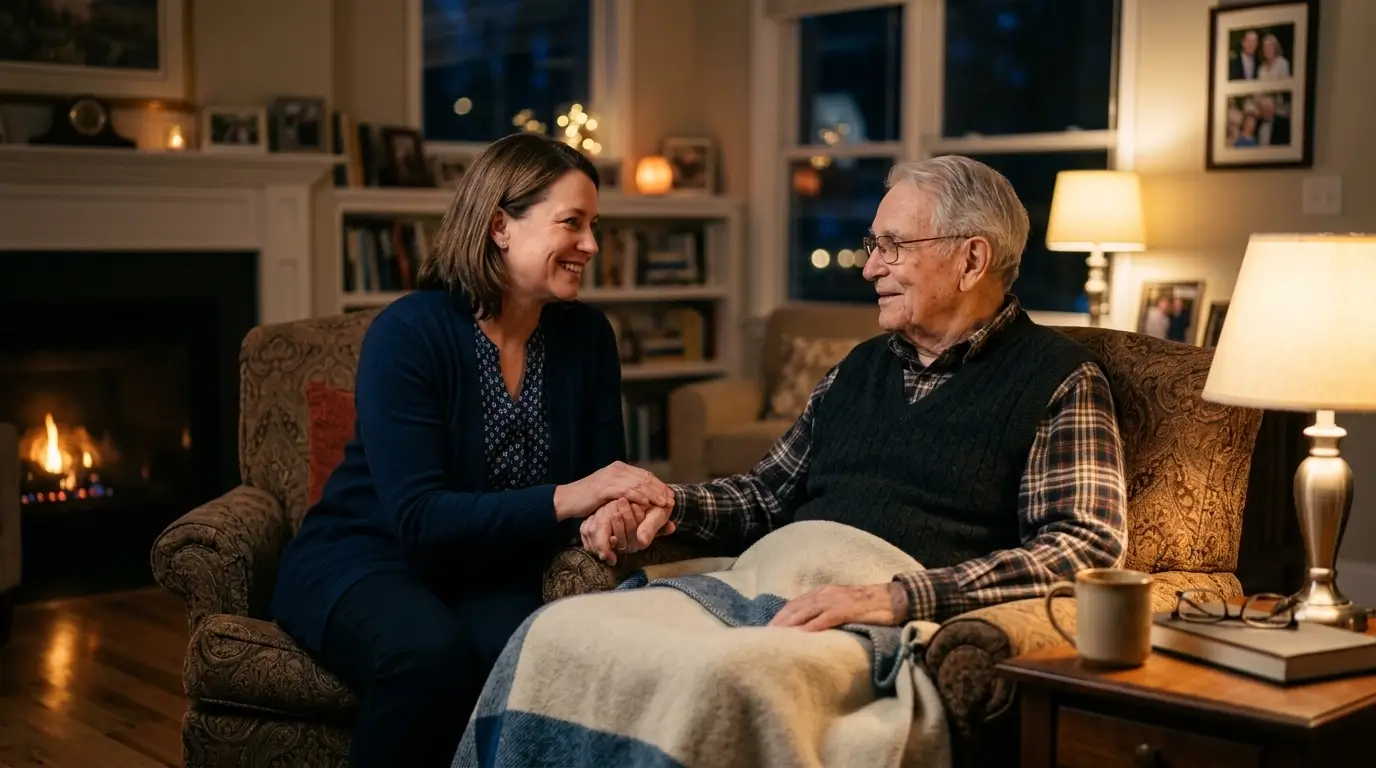
If you would like a second set of eyes on your parent’s home, or would simply like to talk through what kind of support might help them stay safely where they want to be, the Compassion Senior Care team is here. You can learn more on our services page, or reach out whenever you are ready.