Skip to content
When Marion’s family finally brought palliative care into her life last October, her son said something in the doctor’s office in Calgary that has stayed with him ever since.
“I wish someone had told us to do this a year ago.”
Marion had been diagnosed with pulmonary fibrosis fourteen months earlier. In that first appointment, the specialist had mentioned palliative care as an option. The family, without meaning to, had translated the word into something it does not actually mean. They heard “palliative” and heard “the end.” They thanked the doctor and said, gently, that Mom was doing OK for now. Maybe later.
Fourteen months later, the palliative team walked into their lives at exactly the moment the family had once feared. By then, Marion had lived through more than a year of poorly managed breathlessness, anxiety, and sleepless nights. The palliative team could have been there for all of it.
That is the moment most Calgary families discover the biggest misunderstanding in this whole conversation. Knowing when palliative care begins, and when it should begin, changes everything. It can start much earlier than most people realize. And the families who understand that gain months of comfort that would otherwise be lost.
The single most common misunderstanding
If you ask ten Calgary families to explain palliative care, most of them will describe it in a way that sounds like hospice. The final weeks. The final days. A quiet room, a soft blanket, a goodbye.
That is one form of palliative care, but it is not the whole picture. Palliative care is comfort-focused support for anyone living with a serious or progressive illness, and it can begin the moment that illness is diagnosed. Sometimes even before symptoms become difficult.
The confusion between palliative care and hospice care is one of the most persistent problems in this field. Our guide on palliative care vs hospice care for Calgary families breaks down the difference in detail. The short version is this: hospice is one specific stage of palliative care, not the whole of it.
When palliative care can actually begin
Palliative care can begin at many different moments. There is no single right time, and there is almost never a wrong time to start.
At diagnosis of a serious illness. This surprises most Calgary families, but for conditions like cancer, heart failure, COPD, dementia, Parkinson’s, ALS, and kidney disease, palliative care can begin the same week as the diagnosis. It runs alongside the treatment. It supports the person’s whole experience of living with the illness.
When symptoms become hard to manage. Persistent pain, breathlessness, nausea, sleep disruption, or fatigue that the main medical team has not been able to control are signals that palliative expertise could help.
When treatment starts affecting quality of life. Chemotherapy that leaves someone flattened for two weeks. Dialysis that consumes the days between sessions. A treatment that has slowly begun to shape the whole life around it.
When family caregivers are running on empty. Palliative care includes support for the family, not just the patient. If the people caring for your parent are exhausted, that is a valid reason to bring palliative care into the picture.
When emotional or spiritual weight is growing. Anxiety about the future. Sadness that feels heavier than usual. Questions about meaning, legacy, or preparation that a busy medical appointment cannot hold.
What early palliative care actually looks like
The image most families carry of palliative care, a team of clinicians visiting daily, is what late-stage palliative care can look like. Early palliative care usually looks very different.
Early on, palliative care often means a single consultation with a palliative specialist, followed by periodic check-ins. It is a plan and a partnership, not a constant presence. As the illness progresses and needs grow, the involvement grows too.
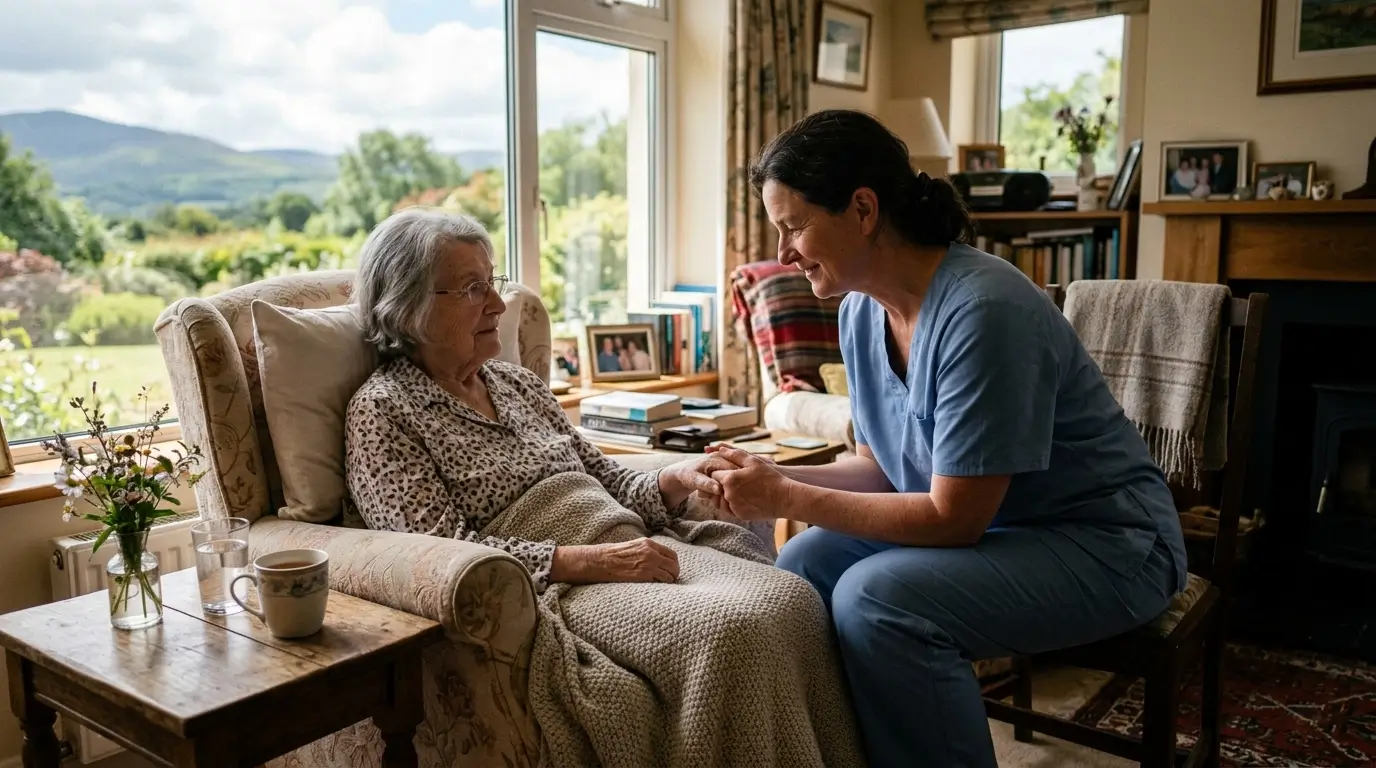
For many Calgary seniors, early palliative care starts with one appointment, produces a plan for symptom management, and then quietly supports the rest of the medical team from the background. Everything else about your parent’s life stays the same. The specialist appointments continue. The gardening continues. The Sunday dinners continue.
Why starting earlier gives families more
The evidence around early palliative care has grown steadily clearer over the past decade. Families who begin palliative care earlier report better symptom control, better mental health, and a stronger sense of preparation and peace than families who wait.
For the person receiving care, earlier palliative involvement often means less pain, less anxiety, better sleep, and a stronger voice in decisions about their own care. For the family, it often means fewer crises, fewer late-night hospital runs, and someone to call at 3 a.m. who already knows the file.
The point is not that palliative care rescues anyone. It is that palliative care surrounds the whole family with support at a moment when the family often feels most alone.
Why families delay, even when they know they shouldn’t
Understanding why families delay is the first step to breaking the pattern.
The word “palliative” carries decades of cultural weight that families often absorb without noticing. Parents of this generation grew up hearing “palliative” only in the context of the final days. Even for those who intellectually understand the difference, the word can still land like a warning.
Doctors do not always raise palliative care early either. Some assume the family is not ready. Some worry about causing distress. Some simply do not have the time in a fifteen-minute appointment to have that kind of conversation.
Family dynamics play a role too. One sibling wants to explore it, another feels it is premature. A spouse feels loyal to the earlier plan of “beating this.” Nobody wants to be the person who “gives up.” So the conversation waits, sometimes for months, sometimes for over a year.
Our article on signs it may be time to consider palliative care for an aging parent walks through the moments when it becomes especially important to have this conversation, whether or not it feels comfortable.
How to bring it up with the doctor earlier than feels comfortable
If you are wondering whether palliative care is worth asking about, the answer is almost always yes.
The phrasing that works well is disarmingly simple. “I would like to ask about palliative care, even if you think it might be early. Can we talk about it?”
That single sentence changes the conversation. It signals that you understand palliative care is not only for end of life, and it invites the doctor to speak honestly about whether it could help now.
Follow-up questions that often help:
What would palliative care actually look like for someone at my parent’s stage? What symptoms could it help with now that we might not be managing as well as we think? Would starting early change anything about the current treatment plan? Who would be on the palliative team?
The answers are almost always more encouraging than families expect.
What changes when palliative care starts early
When palliative care enters the picture earlier, the tone of the whole experience shifts.
The family stops feeling like they are managing the illness alone. Someone with expertise is watching the whole picture, not just the individual test results. Symptoms get named and addressed before they become crises. There is a partner for the hard questions that come up at 2 a.m.
Day-to-day life at home continues, often more peacefully than before, because the load has been shared. In-home care providers may support the family with personal care, companionship, and respite alongside the palliative care team. Our article on managing chronic conditions comfortably at home explores this side of home-based support in more detail.
Nothing dramatic changes on the outside. Inside the home, everything gets a little easier to carry.
Frequently asked questions
Is it too early to start palliative care if my parent is still doing well?
It is rarely too early. Palliative care is often most helpful when it begins early, alongside the rest of the treatment plan. Starting early does not mean escalating care. It usually means a single consultation, a plan, and someone who knows the file if things change.
Does starting palliative care mean giving up on other treatment?
No. Palliative care runs alongside curative or disease-modifying treatment in most cases. Starting palliative care does not require stopping anything else. That decision is separate and can be revisited at any time.
How early is “too early” for palliative care?
In practice, there is almost no such thing. For someone with a serious or progressive illness, palliative care can begin at diagnosis. Even if the involvement is minimal at first, having the palliative team already familiar with the file makes it easier to grow that support as needs change.
Can palliative care be paused or stopped later?
Yes. Palliative care is not a permanent commitment. Some families begin, pause when needs settle, and re-engage later. Others stay lightly connected throughout the illness. The care shapes itself around the person, not the other way around.
What if my parent’s doctor thinks it’s too early?
You are allowed to ask again, or to ask a different member of the care team. If the family caregiver is exhausted, symptoms are hard to manage, or the illness is progressing, palliative care may be worth pursuing even if the primary doctor has not raised it. In some cases, a referral for even one palliative consultation is enough to open the door.
Does palliative care shorten life?
No. Research over the last decade suggests that early palliative care often correlates with better quality of life, and in some studies has been linked with slightly longer survival. It does not shorten life. It supports the person living it.
The kindest thing families can do is ask sooner
The families who bring palliative care into their lives earlier are almost never the ones who regret it. The regret, when it comes, is almost always on the other side. Months lost. Nights of anxiety that could have been eased. Symptoms managed too late.
If a loved one in your family has been diagnosed with a serious or progressive illness, the conversation about palliative care deserves to happen sooner rather than later. Not because anything is wrong. Because comfort is not something to save for the end.
If you would like to talk about what kinds of in-home support might surround your family through this season, whether early in an illness or later, the Compassion Senior Care team is here. You can learn more on our services page, or reach out whenever you are ready.