Skip to content
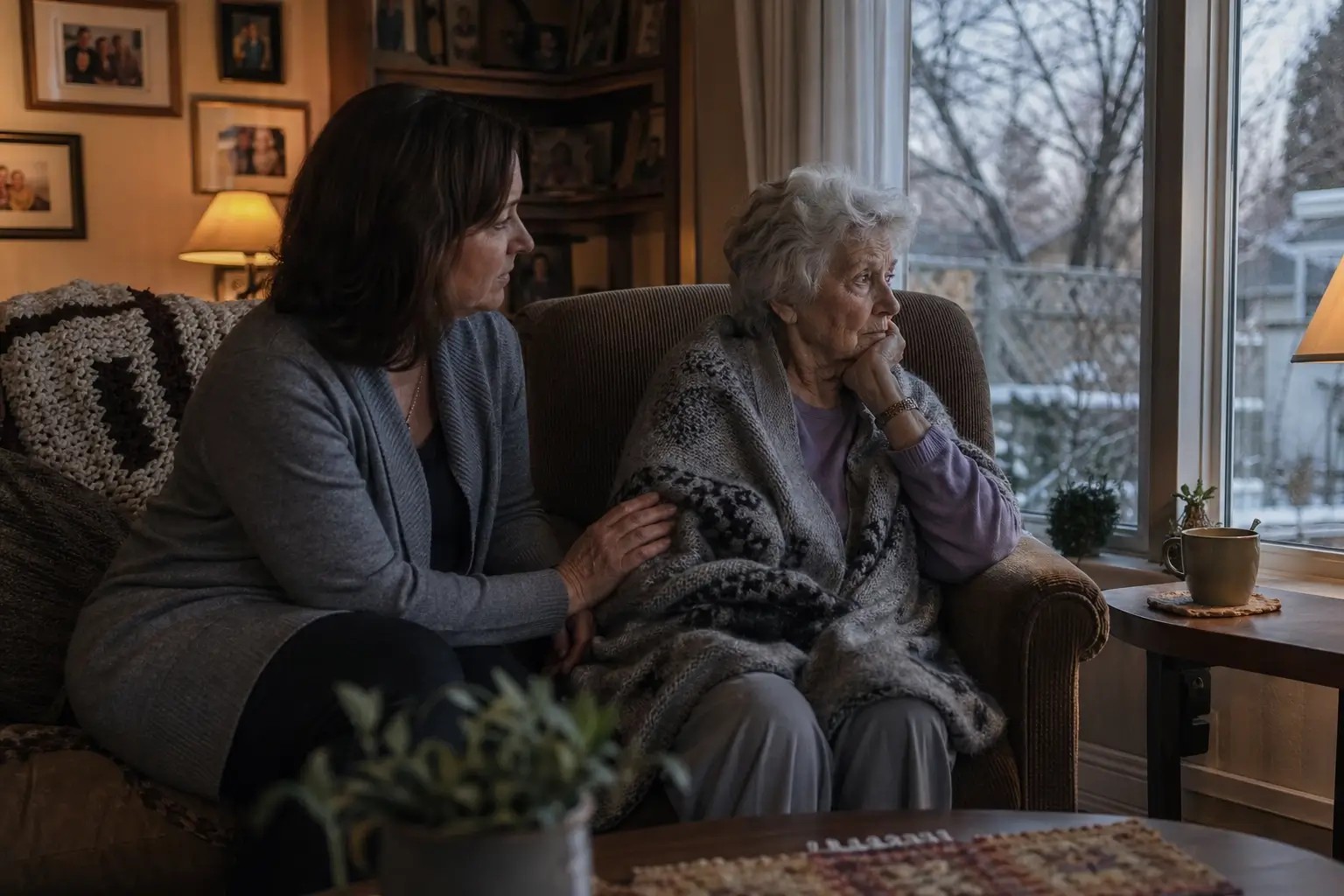
When Margaret stopped returning calls and refused to open her front door in Bowness, her daughter assumed the 79-year-old was simply grieving her husband’s passing. Meals went untouched. The garden she tended for 30 years sat overgrown. Her doctor blamed aging.
A caregiver arriving for a routine companionship visit recognized the real problem within minutes. Margaret wasn’t declining. She was depressed.
Mental health challenges affect nearly 1 in 3 Calgary seniors living at home. Most go unrecognized for months because the warning signs in older adults look nothing like depression in younger people. Families search “my elderly parent won’t eat” or “senior sleeping all day” when the answer isn’t aging — it’s a treatable mental health condition that responds quickly to the right support.
This guide covers what mental health crises actually look like in older adults, why Calgary winters and isolation accelerate them, and how professional home care delivers immediate relief when counseling waitlists stretch six months.
Why Mental Health in Calgary Seniors Goes Undiagnosed
Senior mental health is chronically underdiagnosed because both families and physicians misread the symptoms. Depression in a 25-year-old looks like crying, hopelessness, and expressing sadness. Depression in a 78-year-old looks like sleeping too much, refusing food, snapping at visitors, and seeming “grumpy.”
Families spend months attributing these changes to grief, dementia, or natural aging before someone identifies the real cause. During those months, the condition deepens, social connections erode, and physical health declines in lockstep.
The consequences are serious. Untreated depression accelerates physical decline, increases fall risk, worsens chronic conditions like diabetes and heart disease, and dramatically increases the likelihood of hospitalization. Identifying mental health crisis early is not just about comfort. It is a medical priority.
Warning Signs Calgary Families Need to Know
Because classic depression symptoms rarely appear in older adults, families need a different checklist entirely.
Behavioural changes that signal a mental health crisis:
- Withdrawal from lifelong hobbies, clubs, or religious activities
- Sleeping 12 or more hours daily, or severe insomnia
- Refusing visits or phone calls from family and friends
- Increased alcohol use or misuse of prescription medication
- Persistent irritability, agitation, or unusual anger
- Loss of interest in television programs, sports, or news they previously loved
- Giving away possessions or making comments about not being around
Physical signs commonly mistaken for other conditions:
- Unexplained weight loss of 10 or more pounds
- Chronic fatigue unrelated to any new medical diagnosis
- Increased falls from weakness caused by poor nutrition
- Frequent urinary or digestive issues from dehydration
- Slowed speech or movement
The key rule for Calgary families: Any combination of these signs lasting two or more weeks is not normal aging and warrants immediate attention. What appears to be sudden dementia progression or a personality change often lifts completely with proper mental health support and structured daily care.
If your parent has already been diagnosed with dementia, depression can be especially difficult to identify. Our guide to Dementia Care at Home in Calgary covers how to separate cognitive decline from acute emotional distress.
Why Calgary Seniors Are Especially Vulnerable
Three factors combine to make Calgary seniors particularly susceptible to mental health crises.
Calgary winters create prolonged darkness. From November through March, reduced daylight triggers Seasonal Affective Disorder in 15 to 20 percent of older adults. Seniors in north-facing homes or those with mobility limitations who rarely leave the house are hit hardest. Unlike younger people who commute, exercise outdoors, and socialize after work, many Calgary seniors spend entire winter weeks without meaningful sunlight exposure.
Loss accumulates rapidly in later life. A senior who loses their spouse, two close friends, and their driving independence within two years faces a grief burden that would devastate anyone. When these losses are treated individually rather than cumulatively, the emotional weight goes unaddressed. If your parent recently lost their license or had to stop driving, our guide on when an aging parent should not drive covers how to manage this major life transition in a way that preserves dignity and independence.
Medication interactions trigger and worsen depression. Many Calgary seniors take five or more prescription medications daily. Polypharmacy accounts for up to 30 percent of geriatric depression cases, as combinations of blood pressure medications, diuretics, sedatives, and antihistamines directly affect mood regulation. A thorough medication review with a pharmacist or physician can reverse symptoms entirely. Medication management at home is one of the most underused preventive tools available to Calgary families.
Calgary Mental Health Resources and Where the Gaps Are
Families looking for mental health support for an aging parent in Calgary will find a combination of strong programs and significant wait times.
Available public resources:
- Alberta Health Services (AHS) Geriatric Mental Health Outreach Team — free but 4 to 6 month waitlist
- CMHA Calgary peer support groups — free drop-in available
- Carya Calgary older adult counseling — 3 to 6 month wait
- Senior’s Mental Health and Addictions Response Team through Jewish Family Services
Critical gaps:
- No home-based therapy options through public programs
- No evening or weekend crisis response for seniors
- Medication adjustment support not included in public mental health services
- Most programs require transportation that mobility-limited seniors do not have
This is where professional home care fills an urgent and immediate gap. While waitlists stretch for months, home caregivers trained in mental health first aid can begin structured daily support within days — maintaining medication schedules, providing consistent social connection, monitoring mood changes, and alerting families when professional intervention is needed.
How Home Care Directly Supports Senior Mental Health
Professional home care is not a substitute for psychiatric treatment, but it addresses the three primary drivers of senior mental health decline: isolation, loss of routine, and medication inconsistency.
Companionship visits reduce isolation immediately. Research consistently shows that regular, structured human contact cuts depression severity scores significantly within six weeks. Caregivers provide not just conversation but purposeful engagement — cooking a favorite meal together, playing music from a meaningful era, or simply sitting together during a morning coffee routine. Companionship care in Calgary is specifically designed around this function.
Structured daily routines restore a sense of purpose. Depression thrives in unstructured time. A caregiver who arrives at 9am three times weekly creates anchors in the day — meal preparation, light activity, personal hygiene, outdoor time when weather allows. This structure alone produces measurable improvement in mood and motivation.
Escorted outings rebuild social identity. Whether it is a walk to a Brentwood coffee shop, attendance at a local seniors centre, or a weekly trip to church, getting out of the house with a supportive presence breaks the cycle of withdrawal. Seniors who feel safe leaving home with assistance maintain social connections that are clinically protective against depression.
Medication monitoring ensures treatment actually works. Antidepressants require consistent daily dosing to reach therapeutic blood levels. Missing doses is responsible for 50 percent of treatment failures. A caregiver who ensures medication is taken at the correct time each day is directly supporting clinical outcomes.
For families who are providing significant hands-on care themselves, the emotional weight of watching a parent struggle with mental health can trigger caregiver burnout. Respite care allows family caregivers to step back without leaving their parent without support.
When Mental Health Accompanies Physical Conditions
Mental health crises rarely arrive alone. They frequently accompany or follow physical health events, and the connection is often missed.
Depression affects 40 percent of stroke survivors in the first year of recovery — not as a psychological reaction to disability, but as a direct neurological consequence of brain injury. Our guide to stroke recovery at home for Calgary families addresses this overlap in detail. Similarly, anxiety is a clinical feature of Parkinson’s disease affecting up to 40 percent of patients. If your parent has a Parkinson’s diagnosis, our Parkinson’s home care guide covers how to distinguish disease-related anxiety from situational stress.
Seniors managing multiple chronic conditions are also at highest risk. If a parent living alone shows sudden mental health changes alongside any new physical symptoms, a UTI should always be ruled out first — these infections cause sudden confusion, personality changes, and agitation that mimic psychiatric illness. Read UTIs in seniors: why they’re so dangerous for a complete overview.
When to Act: A Calgary Family Decision Guide
Use this framework to determine urgency:
| Duration of Symptoms | Action |
|---|---|
| 1 to 2 weeks | Begin 2 to 3 weekly companionship care visits |
| 3 to 4 weeks | Schedule family doctor visit and antidepressant review |
| 6 or more weeks | Request psychiatrist referral through AHS |
| Immediate — suicidal thoughts | Call 911 or 211 for crisis support |
Same-day action required if your parent:
- Gives away meaningful possessions
- Makes comments about death or not wanting to be here
- Stops eating entirely for more than 24 hours
- Drinks alcohol heavily every day
If you are managing your parent’s care from another city, long-distance caregiving strategies for Calgary families covers how to monitor mental health remotely and when to escalate to in-person support.
Frequently Asked Questions
Can home care help if my parent refuses all support?
Yes. The key is framing. Most seniors who resist “care” accept “a little company” or “help around the house.” Once a consistent caregiver relationship forms, support expands naturally. Strategies for seniors who refuse help covers this in detail.
Does CDHCI cover home care for senior mental health?
CDHCI covers personal care and daily living assistance for eligible seniors. Companionship and medication management often qualify depending on the care plan. What CDHCI covers in Alberta explains exactly what funding applies.
How do I know if it’s depression or dementia?
Depression typically has a sudden onset and responds to treatment within four to six weeks. Dementia progresses gradually over months and years. A sudden personality shift in a previously stable senior is almost always a medical or emotional crisis — not dementia — until proven otherwise.
My parent says they’re “just tired.” Should I be concerned?
Persistent fatigue combined with any social withdrawal, appetite loss, or mood change lasting two or more weeks is a meaningful signal. Age-related tiredness does not cause personality changes or loss of interest in lifelong activities.
How quickly will home care make a difference?
Most families report visible improvement within two to four weeks of consistent visits. Restored appetite, increased conversation, and willingness to leave the house are typically the first signs. Formal depression score improvements appear within six weeks.
What if my parent lives alone and I’m worried about overnight safety?
Overnight home care in Calgary provides continuous support for seniors whose mental health crisis is creating safety concerns during nighttime hours.
Taking the First Step
Mental health crises in seniors move slowly enough to miss and fast enough to become emergencies. The families who protect their parents most effectively are those who act at the first sign rather than waiting to be certain.
Professional home care delivers immediate, consistent, and compassionate support while public mental health services catch up. A caregiver who knows your parent’s routines, preferences, and baseline is the earliest warning system available.
Contact Compassion Senior Care for a free, no-pressure conversation about your parent’s situation. We serve Calgary families across every neighborhood, seven days a week, with caregivers experienced in supporting seniors through mental health challenges at home.