Skip to content
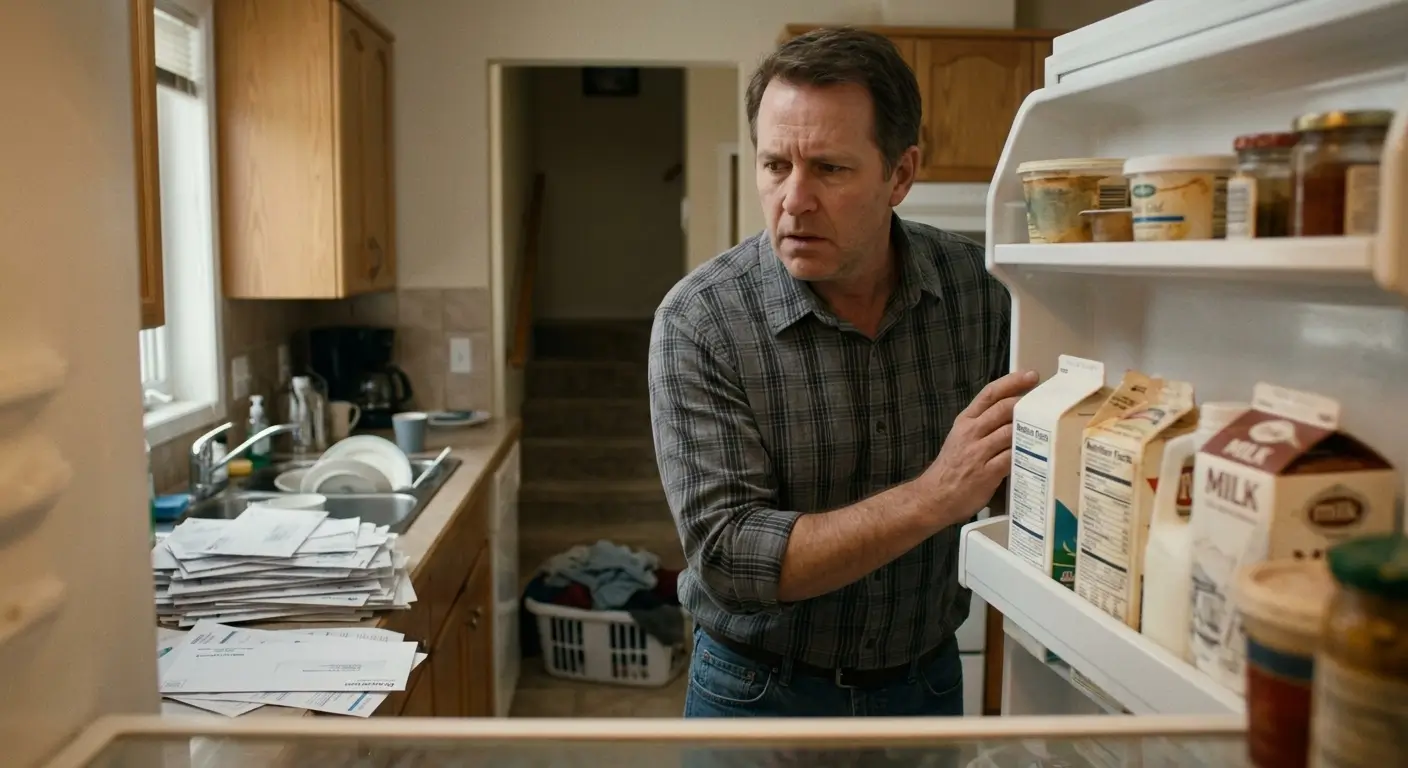
The daughter first noticed it at Sunday dinner. Her mother, now 82, had turned the TV up again. Not dramatically. Just a few clicks louder than the family remembered. Then she asked twice what her grandson had said about school. She laughed it off. “Everyone in this house mumbles.”
By the following spring, the daughter had also noticed her mother holding the newspaper at arm’s length, running her hand along the counter as she walked through the darker parts of the kitchen at night, and stepping away from her book club because “the conversation moves so fast now.”
These were not signs of memory loss. They were signs of something more common and more overlooked. Vision and hearing loss in seniors is one of the most gradual, most invisible, and most life-altering changes of aging, and in many Calgary homes, it does not get the attention it deserves until something bigger happens: a fall, a withdrawal from social life, a missed phone call from a doctor.
The good news is that once families recognize what they are seeing, small home changes and thoughtful in-home care can transform how a senior lives, day to day.
Why sensory decline is so easy to miss
Vision and hearing loss almost never arrive dramatically. They creep in over years, half a decibel and half a diopter at a time. Seniors adapt without realizing they are adapting, and families do not notice until the accumulated adaptations become impossible to overlook.
The mother who has always sat at the head of the dinner table is now the mother who has quietly moved to the seat closest to her better-hearing ear. The father who used to read the whole Sunday paper now reads only the headlines. The grandmother who once knitted intricate patterns now knits scarves.
This is why, when a family finally raises the issue, the senior often responds with what sounds like denial. “I am fine. I have been managing.” That is often true. They have been managing. They have just been managing far more than the family knew.
The signs of vision loss in older adults
Vision changes in seniors show up in specific patterns that family members can learn to notice.
Difficulty in dim light. Trouble navigating a hallway at night. Avoiding rooms with soft lighting. Turning on every light in the house to read.
Reading at arm’s length. Holding the newspaper, phone, or menu further away than they used to. Squinting at prescription labels.
Missing details. Difficulty reading price tags, expiry dates, or dosing instructions. Trouble recognizing people at a distance.
New caution on the stairs. Slowing down noticeably. Reaching for the railing every time. Missing a step occasionally.
Bumping into furniture or door frames. Small unexplained bruises appearing on hips or shins.
Changes in colour perception. Difficulty distinguishing dark blue from black. Trouble telling ripe fruit from unripe.
Trouble driving at night. Avoiding evening trips. Missing turns. Uncomfortable with oncoming headlights.
If several of these are present, an eye exam with an optometrist is the sensible next step. Many age-related vision issues are manageable with the right prescription, cataract surgery, or in some cases treatment for macular degeneration or glaucoma. The key is not letting these check-ups slide.
The signs of hearing loss in older adults
Hearing loss shows up differently, and often more socially, than vision loss.
The TV volume keeps creeping up. The most common signal. Family members can hear the television from the driveway.
Asking “What?” or “Pardon?” more often. Or nodding along without actually catching the words.
Withdrawing from group conversations. In restaurants, at family gatherings, in coffee shops. Group settings become exhausting because following one voice among many is one of the first things hearing loss takes.
Missing the doorbell, phone, or timer. Not because they are ignoring it. Because they genuinely did not hear.
Hearing but not understanding. This is one of the most misunderstood parts of age-related hearing loss. Voices sound like they are there, but the words blur into each other, especially with softer consonants like s, f, and th.
Exhaustion after social events. The mental effort of straining to hear leaves seniors far more tired than the event alone would explain.
Increased volume of their own voice. Speaking louder than they used to, without realizing it.
An audiologist appointment is the appropriate next step. Modern hearing aids are far smaller, more comfortable, and more effective than the ones many seniors remember from their parents’ generation.
Why untreated sensory decline is more serious than it seems
Vision and hearing loss are often treated as minor inconveniences by everyone but the senior living with them. In reality, untreated sensory decline carries some of the most serious ripple effects in senior health.
Falls. Reduced vision is one of the leading contributors to falls in older adults. Every step becomes a small guess about depth and distance. Our article on what to do after a senior falls at home explores the fall side of the equation in more depth.
Social isolation. Seniors who cannot hear well in group settings quietly stop attending them. Book clubs. Church. Weekly bridge nights. Extended family gatherings. The world shrinks room by room. Our article on combating senior loneliness covers the connection between isolation and health more fully.
Depression. Isolation, in turn, opens a door to depression that many families do not recognize until it is well underway.
Cognitive decline. Research over the past decade has increasingly linked untreated hearing loss with an accelerated risk of cognitive decline and dementia. The reasons are still being studied, but the connection is now taken seriously in geriatric medicine.
Loss of independence. Seniors who cannot see well enough to read their own mail, or hear well enough to speak on the phone, lose small pieces of independence week by week. The cumulative loss becomes hard to reverse.
Home changes that make daily life easier
Most families are surprised by how much better a home can feel with small, targeted changes.
Better lighting. More lamps, brighter bulbs, and task lighting exactly where it is needed. Reading chairs, kitchen counters, and the top and bottom of every staircase.
Contrast throughout the home. Dark tape or paint on the edges of pale stairs. A dark cutting board for light foods, and a light one for dark foods. Coloured tape on the edges of light switches and door frames.
Reduced background noise. Turning down the humidifier during conversations. Choosing rooms with softer surfaces (rugs, curtains, upholstered chairs) for family gatherings. These changes help both hearing aids and unaided hearing.
Amplified phones and doorbells. Available at most electronics stores in Calgary. Some models flash lights in addition to ringing, which helps seniors who miss the sound entirely.
Large-print items. Large-button remotes. Large-print calendars. Large-print prescription labels (any Calgary pharmacy will provide these on request).
Voice-activated devices. For seniors comfortable with the technology, voice assistants can dial the phone, set reminders, and play music without any need to read tiny screens or press small buttons.
A well-lit, uncluttered path from bed to bathroom. For safe nighttime navigation without turning on harsh overhead lights.
Our guide on home modifications for seniors in Calgary walks through the full room-by-room approach to making a home safer, and much of what applies to falls prevention also applies to sensory decline.
How in-home care changes the daily experience
There is a specific kind of quiet dignity that in-home care can provide for a senior living with vision or hearing loss.
A regular caregiver becomes someone who reads the mail aloud without being asked. Someone who repeats a doctor’s instructions in a calm voice, from close enough to be heard clearly. Someone who dials the phone, describes what is on the television, or reads a birthday card from a grandchild in Halifax word by word.
Practical personal care supports become smoother when the caregiver knows how to communicate with someone who does not hear or see well. Bathing, dressing, and grooming happen without frustration or shouting.
Homemaking becomes safer when a caregiver notices that ingredient labels are hard to read, stove settings hard to see, or the kettle whistle hard to hear.
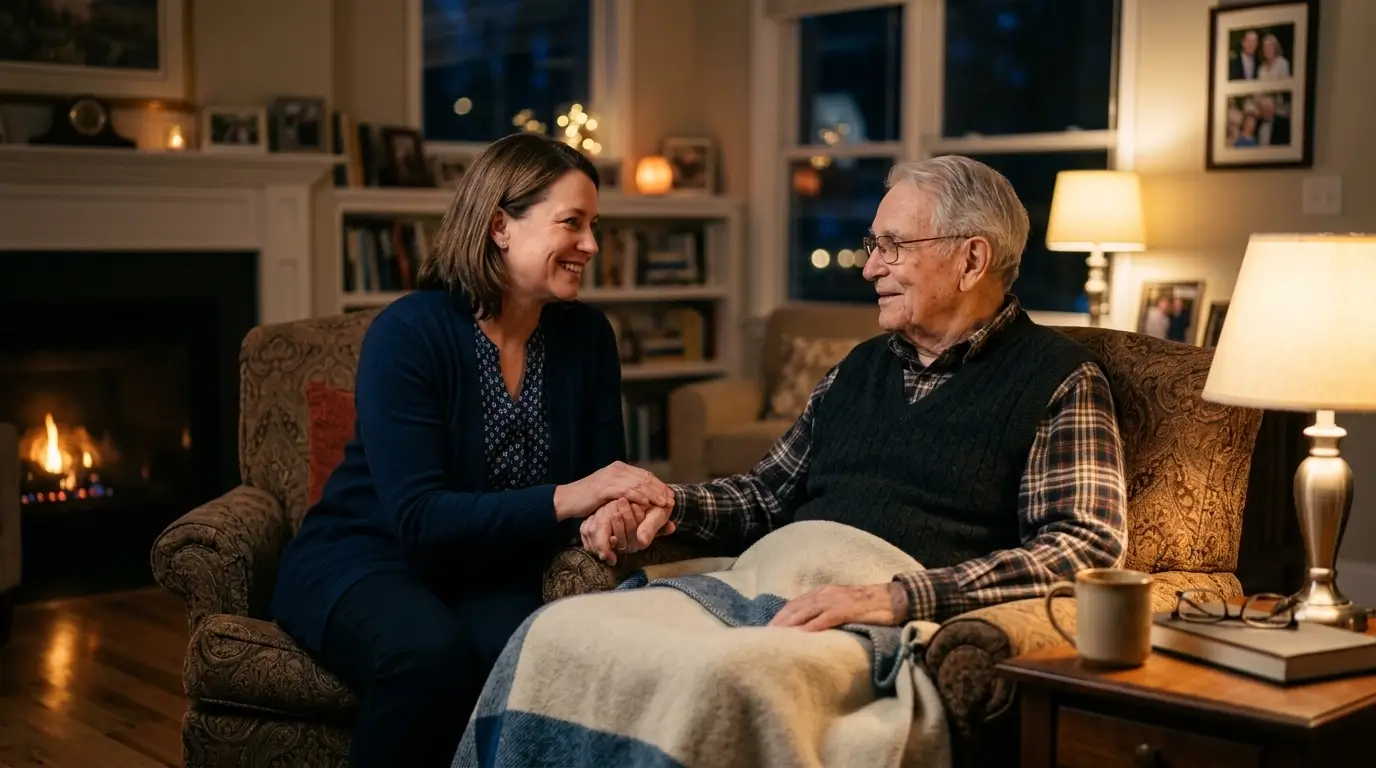
And companionship becomes especially meaningful. A caregiver who sits close, speaks clearly, and takes the time to converse without rushing brings the outside world back into a home that has quietly grown smaller.
The Calgary winter compounds all of this
Calgary winters make sensory decline harder to live with in ways that are easy to overlook.
Reduced daylight during the darkest months means seniors who already struggle with dim vision have hours less usable light per day. Icy sidewalks turn each uncertain step outdoors into a real risk. Windier days mean hearing conversations outside is even more difficult.
Winter also brings extended time indoors, which amplifies whatever isolation was already present. The book club goes on hiatus. The grocery run gets postponed. The world becomes the four walls of the house.
This is why the in-home caregiver, the phone call, the visit from a neighbour, and the extra lamp switched on all matter so much more between November and March.
How to talk to your parent about vision or hearing loss
This conversation often lands poorly if it is framed around decline.
The approach that tends to work is framing tools and support as ways to protect the life they already love. “Mom, you love your book club. Let’s do whatever we can so you can keep going.” “Dad, you love Sunday phone calls with your brother. Let’s make them easier.”
Avoid the words “hearing loss” and “vision loss” in the early conversations. Ask instead if they would be up for a check-up. Ask if a brighter lamp by the reading chair would help. Ask if an amplified phone would make catching up with cousins easier.
Once the tools are in the home, and the tools have made a difference, the words become much easier to use.
Frequently asked questions
How do I know if my parent has vision or hearing loss they are hiding?
Watch for patterns rather than single incidents. TV volume creeping up. Newspapers held further away. Withdrawal from group activities they used to enjoy. Nodding along without responding to specifics. Missing phone calls or the doorbell. Any of these on their own can be nothing. Several of them together deserve a conversation and a check-up.
My parent refuses to wear hearing aids. What can we do?
This is one of the most common frustrations Calgary families face. Modern hearing aids look nothing like the ones your parent may remember from their own parents. Sometimes visiting an audiologist to see the newer, smaller options changes the picture. Sometimes framing hearing aids around a specific goal (“so you can hear the grandkids clearly”) works better than a general call to wear them. Patience matters more than persuasion.
Can hearing loss really cause depression or dementia?
Research increasingly links untreated hearing loss with higher rates of social isolation, depression, and cognitive decline. The relationship is complex and still being studied, but the connection is now taken seriously enough that hearing loss is treated as a modifiable risk factor for cognitive health in older adults.
What home changes make the biggest difference?
Better lighting is the single change with the largest impact on daily life for most Calgary seniors. Beyond lighting, contrast in the home (dark on light, light on dark), reduced background noise during conversations, and amplified phones and doorbells make the biggest quality-of-life difference. Small changes, consistently applied, transform a home.
How can a caregiver help specifically with vision or hearing loss?
A regular caregiver reads mail aloud, dials phones, describes what is on television, communicates clearly during personal care, prepares meals when reading recipes has become hard, and provides steady companionship that pushes back against the isolation that so often follows sensory decline. The presence of one familiar person who knows the routine makes an enormous difference.
Could my parent’s confusion actually be a sensory issue?
Yes, and it happens more often than families realize. Seniors who cannot hear well may seem confused because they are missing half the conversation. Seniors who cannot see well may seem disoriented because the visual cues most people rely on are no longer available to them. Before assuming confusion is cognitive, an eye and hearing check-up is worth doing.
Small changes, big daily difference
Vision and hearing loss in seniors are among the most under-addressed changes in aging, not because families do not care, but because the changes are so gradual that they hide in plain sight.
Once a family sees them clearly, the path forward is usually not dramatic. A brighter lamp. A hearing test. A larger phone. A caregiver who reads the mail aloud. Small, human, everyday changes that quietly give a Calgary senior back the life they were already living, with less struggle.
If you would like to talk about what in-home support could look like for a loved one navigating vision or hearing loss, the Compassion Senior Care team is here. You can learn more on our services page, or reach out whenever you are ready.